In the rapidly evolving domain of industrial control systems (ICS) and the Internet of Things (IoT), security vulnerabilities can have cascading impacts that echo far beyond traditional IT networks. Recently, the cybersecurity community was alerted to a significant security flaw impacting a massive footprint of industrial operational infrastructure.
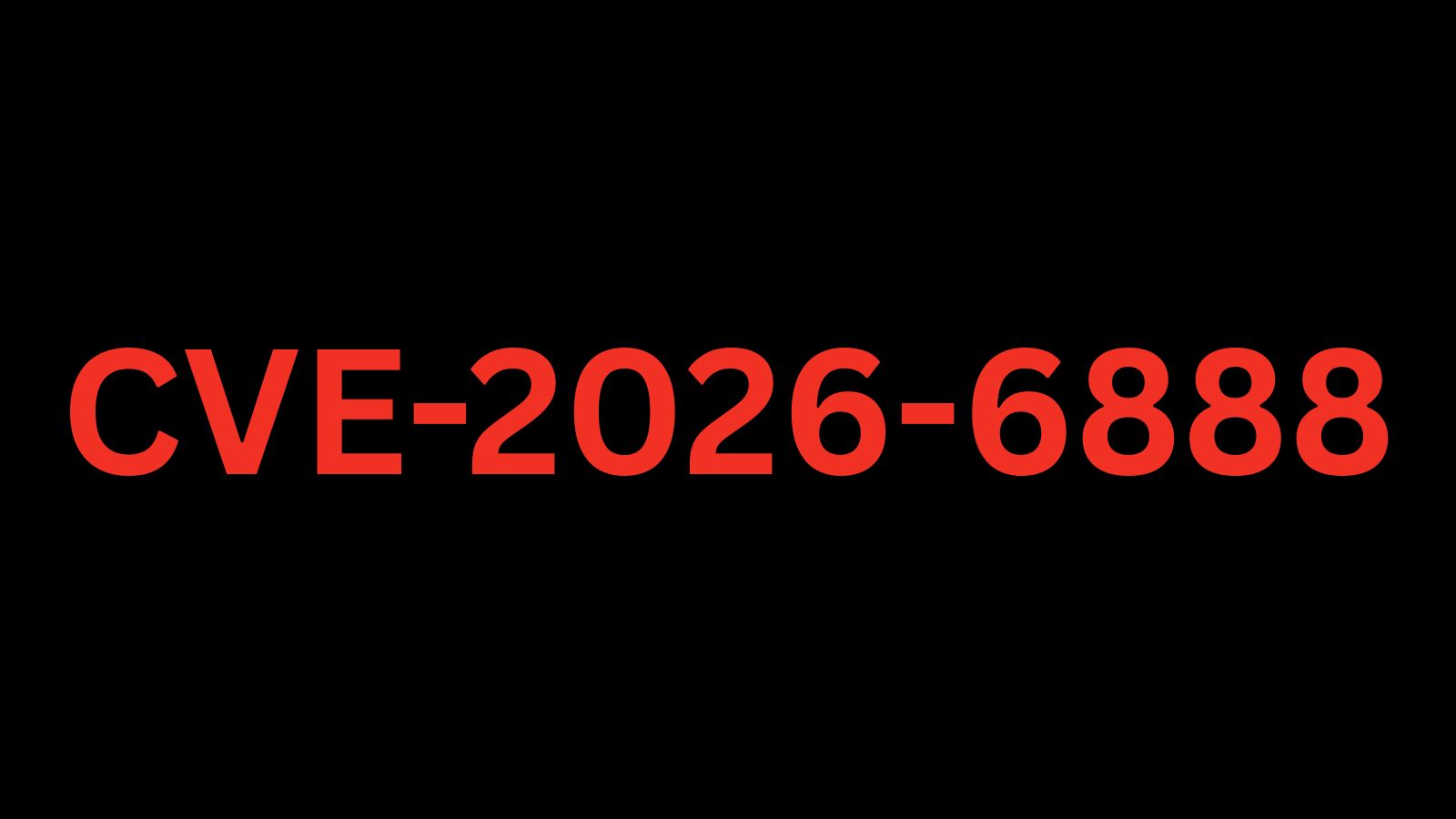
The Cyber Security Agency (CSA), adhering strictly to its Responsible Vulnerability Disclosure Policy, has officially issued a critical vulnerability identifier, tracked as CVE-2026-6888.
This vulnerability directly affects an array of flagship products developed by Advantech, a globally recognized powerhouse in providing IoT intelligent systems, industrial automation computing, and embedded platform services.
Because Advantech’s solutions are deeply ingrained in critical infrastructure, smart manufacturing, and enterprise-level automation grids worldwide, the disclosure of this vulnerability necessitates immediate attention from network administrators, IT security teams, and Operational Technology (OT) engineers.
CVE-2026-6888: Critical SQL Injection Fix
CVE-2026-6888: The Mechanics of the SQL Injection At the technical core of CVE-2026-6888 is a severe SQL injection (SQLi) vulnerability. SQL injection remains one of the most pervasive and dangerous classes of web vulnerabilities, allowing threat actors to interfere with the queries that an application makes to its backend database.
According to the official technical advisory released by the CSA and confirmed by Advantech, this specific vulnerability resides within a specific application interface utilized by the affected platforms.
To successfully exploit CVE-2026-6888, an attacker must first possess remote authentication credentials. While the requirement for authentication might seemingly lower the immediate risk profile compared to an unauthenticated zero-click exploit, cybersecurity professionals understand that this is a false sense of security.
In today’s threat landscape, valid credentials are routinely harvested through sophisticated phishing campaigns, purchased on initial access broker (IAB) dark web forums, or brute-forced via credential stuffing attacks.
Once an attacker bypasses the authentication perimeter using low-privileged or compromised credentials, they can leverage the SQL injection vector to dynamically execute arbitrary SQL commands directly against the underlying database architecture.
The successful exploitation of CVE-2026-6888 poses a catastrophic threat to the fundamental pillars of information security: Confidentiality, Integrity, and Availability (the CIA triad). By executing arbitrary commands through the vulnerable interface, a remote authenticated attacker can effectively bypass intended application logic.
First, the attacker can access highly sensitive telemetry, proprietary operational algorithms, and user data stored within the SCADA or IoT environment, resulting in a severe data breach and loss of confidentiality.
Second, the integrity of the system is entirely compromised; threat actors can silently modify critical database tables, alter user permissions, or change operational setpoints in SCADA systems, which could lead to physical industrial processes behaving erratically or unsafely.
Finally, the attacker has the capability to delete vast swathes of database information, rendering the IoT infrastructure effectively blind and causing massive operational downtime, directly impacting system availability.
Patch and Mitigation
The scope of CVE-2026-6888 is notably broad, impacting several distinct software ecosystems within the Advantech portfolio. Organizations utilizing any of the following product versions are operating in a highly vulnerable state:
- SaaS Composer: All versions prior to 3.4.17 are affected.
- WebAccess SaaS-Composer: All versions prior to 3.4.17.1 are vulnerable.
- ECOWatch SaaS-Composer: All versions prior to 3.4.17 are exposed to this threat.
- WebAccess/SCADA: All iterations preceding version 9.2.3 are fundamentally vulnerable. This is particularly critical as WebAccess serves as the human-machine interface (HMI) for real-time industrial process control.
- IoTSuite Growth Linux Docker: Deployments running versions prior to 2.2.0 contain the SQLi flaw.
- IoTSuite Starter Linux Docker: Instances prior to version 2.2.0 are vulnerable.
- IoT Edge Linux Docker: Containerized environments earlier than version 2.2.0 are affected.
- IoT Edge Windows: Native Windows deployments prior to version 2.2.0 are susceptible to database manipulation.
The absolute primary directive for mitigating CVE-2026-6888 is the immediate patching and updating of all affected Advantech systems. The product owner has proactively developed and released comprehensive security updates designed to completely eradicate the SQL injection vector from the affected interfaces.
However, the remediation process varies depending on the specific product deployed in your environment. For administrators managing SaaS Composer, IoTSuite Growth Linux docker, IoT Edge Windows, and ECOWatch, it is imperative to establish direct communication with Advantech.
Organizations must contact Advantech’s official support channels to obtain the verified official release of the fixed versions, ensuring a secure and authenticated transfer of the security patches.
Environments relying on containerized deployments face a slightly more complex remediation path. For both IoTSuite Starter Linux docker and IoT Edge Linux docker, administrators must consult the official update guides.
Crucially, addressing the vulnerability in these docker environments requires a complete reinstallation process rather than a simple in-place patch. IT teams must meticulously follow the vendor-provided reinstallation guide to ensure operational continuity and prevent data loss during the container rebuild.
Lastly, for critical operational software like WebAccess/SCADA and WebAccess SaaS-Composer, administrators are directed to navigate to the official Advantech security advisory portal and strictly follow the documented update guide to apply the necessary executable patches.
FAQ
Q: What is the core technical threat of CVE-2026-6888?
It is a critical SQL injection vulnerability in Advantech products that allows remote authenticated attackers to execute arbitrary commands and manipulate underlying databases.
Q: Which specific industrial and IoT products are compromised by this vulnerability?
The flaw impacts older versions of SaaS Composer, WebAccess/SCADA, ECOWatch, and multiple Linux and Windows versions of IoTSuite and IoT Edge platforms.
Q: How does a remote attacker exploit this Advantech security flaw?
An attacker with valid authentication credentials can manipulate a specific interface to inject malicious SQL queries, granting them power to access, alter, or delete sensitive data.
Q: What is the recommended remediation process for affected docker environments?
Administrators running affected IoTSuite Starter and IoT Edge Linux docker versions must perform a complete reinstallation using the official Advantech update guides.
Site: thecybrdef.com
For more insights and updates, follow us on Google News, Twitter, and LinkedIn.
About the Author